
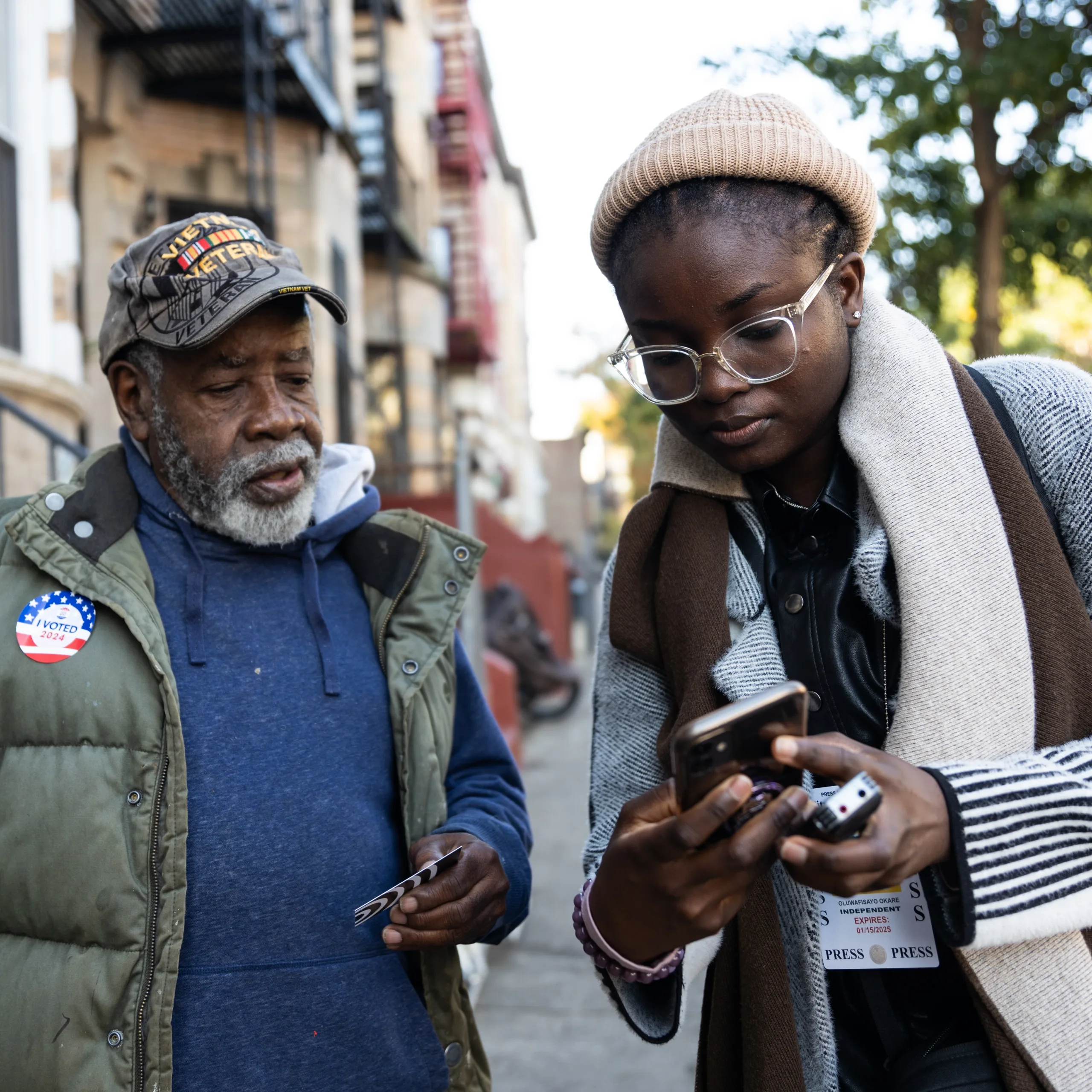


Each selected newsroom will receive a $10,000 stipend to launch a high-quality, community-driven journalism product.
After completing its first national training program, Documented is excited to open applications for the second cohort of our national training program, which supports local newsrooms across the United States and its territories in better serving immigrant communities.
The 2027 Building Bridges: An Immigrant Media Training Program will offer a practical, intensive, and highly supportive training program for seven newsrooms interested in launching or revamping an editorial product based on inclusive, ethical, and high-quality journalism produced for and with immigrant communities in their regions.
The training is grounded in principles of active listening, building trust, and fostering longstanding relationships with immigrants. We will select another cohort for 2028.
Program overview
Documented—a New York-based, immigrant-serving nonprofit newsroom—has built an intentional system from our founding to integrate immigrant communities into our journalism workflows and editorial product development. We have created unique publishing platforms that successfully serve and engage immigrants where they are. As a result, we regularly receive dozens of requests from newsrooms across the U.S., Latin America, and Europe to learn from our community-driven, multilingual journalism model. This training program responds to that.
The Building Bridges: An Immigrant Media Training Program is a project-based educational initiative that supports newsrooms in building community-driven journalism products that better serve immigrant communities.
This stipend-based training program builds on lessons and best practices from Documented‘s model, which includes listening to and understanding immigrant communities through needs assessments (based on principles from the Listening Post Collective) and launching a customized editorial product that reflects immigrant voices and serves those needs.
Newsrooms will follow a 15-module course over 30 weeks to create an editorial product from scratch or overhaul an existing one designed with—not only for—immigrant communities. Several modules will also focus on funding to support sustainability.
The program will offer weekly virtual sessions or office hours with Documented‘s staff and subject-matter experts to support them throughout the process.
Each selected newsroom will receive $10,000 in stipends to launch the product and will participate in a final presentation where they will be introduced to funders. Newsrooms will also be encouraged to invite their funders.
At the end of the program, participants will be invited to join a community of practice to receive ongoing support and peer advice as they develop their product and contribute to a growing field of community-driven journalism.
Participant newsrooms must agree to publicly share their projects and lessons learned.
Who should apply
This training is intended for reporters, editors, and managers working in any newsroom in the U.S. and its territories who are willing and committed to better serving immigrant communities. One full-time employee must be available (and excited!) to participate in the weekly virtual sessions, and one part-time or full-time employee must support project development, fundraising, and sustainability.
Commitment and timeline
Applications open on September 21st, 2026, and close on October 26th, 2026, at 11:59 p.m. PT. The training program will commence in early January 2027 and conclude in early August 2027. We will share exact dates with participants upon acceptance.
Participant newsrooms will need to dedicate about 8-10 hours per week to reviewing module content, attending virtual sessions, and completing mandatory assignments to support them in researching, designing, prototyping, testing, and launching the product, among other learning activities.
At the end of the training program, newsrooms are expected to have designed a strategy to launch a new or overhaul an existing editorial product to serve immigrant communities.
Examples of products could include tuition trackers for immigrants, tools to support moving to immigrant-friendly cities, immigration lawyers’ trackers for accepting new clients, vcasts that teach immigrant languages via local news, language and immigration data explorers, and hubs to support the financial development of an immigrant community. Projects that only contemplate story translations will not be considered.
Financial support
The program is free for all newsroom participants. A grant from Knight Foundation and others enables this foundational work and the provision of stipends.
Documented‘s first national training program achieved remarkable success by transforming deep community listening into actionable, high-impact editorial products tailored to historically underserved immigrant communities. By supporting newsrooms as they either validated initial ideas or adapted through direct community feedback, Documented‘s Education team helped them produce tangible outcomes across diverse media formats.
Our first cohort
In 2026, Documented conducted its first national training program. We selected participant newsrooms from 82 applicants across 22 U.S. states.
Ethiopique, a local news and community platform serving Amharic-speaking immigrant communities in the DMV region, launched Buhe, a bilingual (English and Amharic) video and reflection series on Substack about building life, stability, business, ownership, and opportunity. Henok Mengistu, the founder and mastermind behind the idea, has already attracted dozens of investors to his project.
India Currents is an award-winning nonprofit news organization that tells Indian American stories exploring life in the United States. They designed a series of newsletters based on the Diaspora feedback on aging and living, belonging and arts and culture.
KPBS, a public media station that has served San Diego communities for over 60 years, launched a WhatsApp channel for transborder immigrant communities in San Diego and Tijuana.
The San Francisco Public Press, a nonprofit news organization focused on historically underserved communities, including Asian Americans, is working to launch a bilingual vcast to break down language barriers among Chinese immigrants. Zhe Wu, the community reporter, envisions local news as the bridge between young and older generations.
VozColectiva, a women-led newsroom for Latin women from Philadelphia, overhauled a printed brochure for domestic violence survivors, adding a video library to inform them about available resources.
About Documented
Documented was founded in 2018 and was among the first newsrooms to launch a Spanish-language WhatsApp newsletter, Documented Semanal, in response to community needs. Since then, Documented has built several additional products to serve New York City-based immigrant audiences across platforms and in multiple languages.
Contact information
For updates on the training program, subscribe to our Early Arrival newsletter or follow us on LinkedIn, Facebook, Instagram, BlueSky, or X. To learn more, visit our FAQs section below or register for our Q&A in English here. If you have questions, email María Arce, Education Program Manager at Documented, at maria.arce@documentedny.com or book a meeting with her here.
FAQs
1. What is the 2027 Building Bridges: An Immigrant Media Training Program?
It is a training and product development program designed to support newsrooms in the United States and its territories in shifting from traditional immigration beat coverage to community-driven journalism that better serves immigrant communities.
2. Who is eligible to apply?
Newsrooms of any business model (nonprofit, for-profit, community-based, or university-affiliated) with ideally at least five staff members in the U.S. and its territories that can demonstrate serving immigrant communities or community-driven journalism is part of their mission or ethos, or is embedded in their editorial process.
3. Does my newsroom already need to serve immigrants?
We encourage applications from newsrooms that either serve immigrant communities or cover immigration as a beat.
4. What type of commitment is required?
Each selected newsroom must have one full-time employee dedicated to completing the training and one full- or part-time employee to support the product development and fundraising process. Full- or part-time refers to the participating employee’s relationship with their newsroom.
Each selected newsroom should attend 30 weekly online sessions or office hours, review the content delivered via newsletter, complete each mandatory weekly assignment, and present a final product in an online public event.
Each selected newsroom should dedicate approximately 8-10 hours per week to attend sessions and complete assignments, which will help them research, design, prototype, test, and launch the new product, among other learning activities.
Each selected newsroom must agree to publicly share its projects and lessons learned during the training process.
5. What kind of product do we need to build?
You should develop either a new product or significantly improve an existing one to better serve immigrant communities, based on community feedback. The training program will guide you through that process. You don’t need to have all the answers when you apply. Examples of products could include tuition trackers for immigrants, job search programs for immigrants, tools to support moving to immigrant-friendly cities, immigration lawyers’ trackers for accepting new clients, vcasts that teach immigrant languages via local news, language and immigration data explorers, and hubs to support the financial development of an immigrant community. Projects that only contemplate story translations will not be considered.
6. Is the training conducted in-person or remotely?
The training is conducted remotely, with a mix of newsletter-based content, virtual sessions or office hours, and a workbook to track progress.
7. Are there any costs to participate in the program?
No. Participation is free and fully funded, and $10,000 stipends per newsroom will be offered to support the product development. Payments will be made directly to newsrooms in installments as work is completed.
8. Are there any other benefits for attending the program?
Yes. At the end of the program, newsrooms will present their projects to a round of investors.
After the program, participants will be invited to join a community of practice for ongoing peer support and collaboration. They will also have access to six-month check-ins and free consulting hours with Documented’s team for 18 months.
Newsrooms interested in Documented‘s stories and guidelines will be invited to become partners for republication.
9. What is the timeline for the application and selection process?
Applications open on September 21st, 2026, and close on October 26th, 2026, at 11:59 p.m. PT. We will notify selected newsrooms by late November and announce them publicly in early December. The program runs from early January 2027 to early August 2027. We will share exact days and times with participants upon acceptance.
10. What happens after I apply?
After scoring applications, the committee will review top candidates in detail and select a shortlist for interviews and a final decision.
11. How are interviews conducted?
Shortlisted newsrooms will participate in virtual interviews with members of the selection committee. The final selection will be based on a combination of application and interview scores.
12. Can I submit a joint application with another newsroom?
Yes, but you will need to explain during the application process how you plan to work together and which newsroom will receive the training program stipends.
13. What do I need to apply?
Just answer the questions in the application form.
14. How many newsrooms will be selected?
The second cohort of the training program will consist of seven newsrooms. We plan to repeat the training program in 2028.
15. Will we receive feedback if we are not selected?
We will notify all newsrooms whether they were selected. Due to the high volume of applications we received last year, we won’t be able to provide feedback to every applicant.
16. How can I stay informed about the program?
You can sign up for our Education newsletter at the bottom of this page or for the Early Arrival Newsletter, or follow us on LinkedIn, Facebook, Instagram, BlueSky, and X to stay up to date on announcements and deadlines. We will also host an English-language Q&A session to answer your questions about the program on September 29th at 1 pm ET. You can register here.
17. Where do I apply?
You can apply here.
Stay Updated
Join our education mailing list for exclusive updates on this program and future journalism training initiatives.